Written by: AeroSignage GlobalReviewed by: AeroSignage Editorial TeamPublished:Updated: No later material update recorded
Custom hotel room number signs are made through a sequence of specification review, artwork preparation, CNC toolpath planning, cutting or carving, surface finishing, assembly, checking, packing, and export coordination. The strongest results come when the buyer treats room numbers as a production system, not a single image.
Custom hotel room number signs are shaped by artwork review, CNC path planning, finishing, assembly, and packing control.
1. The process starts with a room schedule and sign specification
A factory cannot accurately price a hotel room number program from a single reference photo. It needs the room list, digit count, sign size, material target, thickness, finish reference, mounting surface, lighting requirement, and whether each unit must be packed by floor, room, or installation zone. These details decide material usage, machine time, finish route, assembly steps, and packing method.
AeroSignage works as the official international sales and service office for an affiliated manufacturing base, so the first job is to translate buyer intent into production review. That means asking practical questions before price is fixed: is the sign flat, layered, carved, dimensional, illuminated, tactile, or decorative? Is the design repeatable across all rooms, or are suites and villas different? Does the buyer need a sample before bulk production?
2. Artwork becomes a CNC path, not just a picture
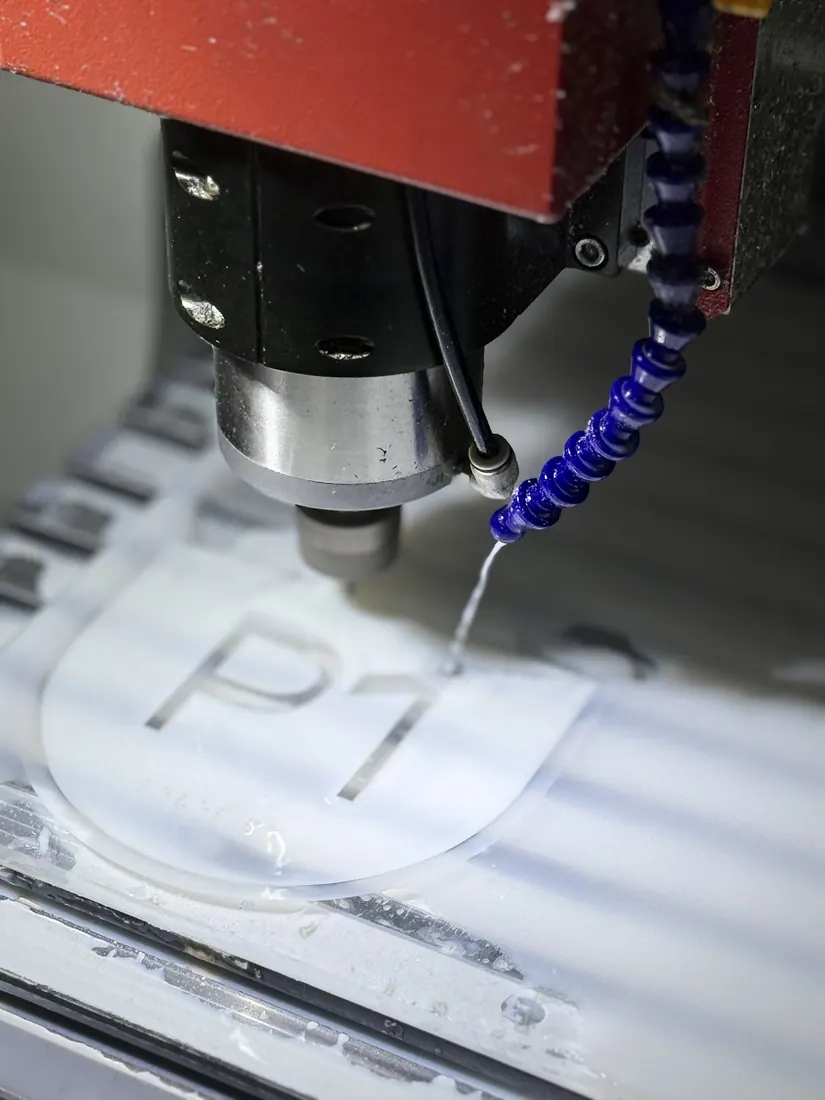
For CNC-carved hotel room number signs, artwork must become a toolpath. The file tells the machine where to remove material, where to leave raised numbers, how deep the background should be, and which border or texture should catch light. A screenshot can communicate style, but it cannot directly control the cutter.
If the sign uses relief borders, spherical numbers, recessed backgrounds, hollow cuts, or texture fields, the carving file is part of the product. A buyer should provide editable vector artwork where possible, such as AI, PDF, SVG, CDR, or DWG. If the buyer only has inspiration images, engineering review can still begin, but a production file has to be created before the result is reliable.
3. Finishing gives the sign its commercial value
After cutting or carving, the sign is still unfinished. Grinding, sanding, polishing, painting, oxidation, aged copper treatment, UV printing, brushing, plating, clear coating, or mixed processes create the final look. This is why two plaques with the same shape can feel completely different in a corridor.
A room number sign with a black textured background and polished gold raised digits needs different process control from a ceramic insert plaque, a backlit acrylic sign, or a red antique copper relief plaque. Finish variation must be discussed before production, especially for hand-aged surfaces. Buyers should approve the finish reference before producing a full hotel schedule.
4. Assembly, checking, and packing protect the project
Many room number signs are assemblies: raised digits glued or fixed to a base, acrylic panels layered over metal, ceramic inserts seated inside a border, or light modules installed behind the face. Assembly quality affects alignment, shadows, edge gaps, and how the sign handles shipping.
For hotel projects, packing is part of quality control. Signs should be protected from rubbing, labeled by floor or room, and grouped so installers do not waste time sorting boxes on site. Pre-shipment photos, first-article approval, and clear packing notes help the buyer control risk before the order leaves the workshop.
Production Step
What Happens
Buyer Should Confirm
Specification review
Room list, size, material, finish, mounting, and packing are reviewed
Full schedule, quantity, installation context, and sample needs
CNC path planning
Artwork is converted into cut, relief, raised, recessed, or texture instructions
Editable vector file, relief notes, and final artwork approval
Surface finishing
Painting, polishing, aging, UV, oxidation, brushing, plating, or mixed finish
Finish reference photo, sample target, and acceptable variation
Assembly and packing
Digits, inserts, layers, lighting, hardware, labels, and protection are checked
Room-by-room packing, mounting hardware, and pre-shipment confirmation
Key takeaways
A hotel room number program is a production system with schedule, artwork, finish, assembly, and packing requirements.
CNC carving depends on toolpath files, not just inspiration images.
Surface finishing creates much of the perceived value, so finish references must be approved early.
Packing by floor or room reduces installation risk for hotel projects.
A first-article sample is the safest way to lock relief depth, finish, and mounting before bulk production.
Sources and review scope
Supplier-specific statements use clearly identified first-party AeroSignage materials.
Local codes, accessibility requirements, engineering details, and order-specific claims must be confirmed for the destination market before production.
FAQ
Can custom hotel room number signs be made from only a photo?
A photo can start the discussion, but accurate production needs dimensions, material, thickness, finish target, quantity, mounting surface, and a production file or engineering redraw. A photo is a reference, not a CNC toolpath.
Why does CNC carving need a special file?
The CNC machine follows paths that define depth, raised areas, borders, textures, and cutouts. A visual design must be converted into production geometry so the cutter creates the intended relief and surface.
When should a hotel request a sample?
Request a sample when the project uses a new finish, deep relief, lighting, mixed materials, or a large room schedule. A sample locks the appearance and construction before bulk production.
What should be checked before shipping hotel room number signs?
Check finish consistency, number accuracy, alignment, mounting holes or hardware, lighting if included, packing protection, labels by room or floor, and photos of the finished batch before shipment.
Fabrication & Materials
Continue with the manufacturing pillar or focused guides for CNC routes, materials, finishes, production files, samples, and quality review.